Overview
As it implied by the name "Nagasaki Biopark", we are not just a mere zoo.
Life in 'natural' environment
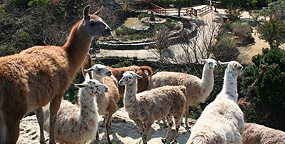
The animal at the Nagasaki Biopark re not 'on display'(as is common at a 'standard' zoo, for
example), but are instead living as far as possible as they would in the wild; that is, in their
'natural' environment.
Every animal, insect, tree and flower - indeed every example of nature within Nagasaki Biopark, from
truly minuscule to the very large - is part of an exquisite biological microcosm.
At Nagasaki Biopark, every visitor can truly understand the meaning and value of life and nature.
Touch and interact with animals
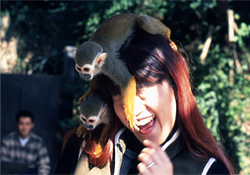
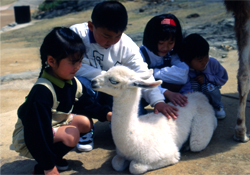
Nagasaki Biopark's breeding style is 'ecological display' ever since we first opened. Here you can
touch and feed a lot of animals directly.
Naturally, the reason you can touch and imteract with lemurs, squirrel monkey, capybara and so on is
because there is no boundary line between you and the animals.
The park is specifically designed to replicate as closely as possible the environment and ecosystem
the animals are living in originally.
Thus, you can see the animals living naturally and freely here.
Uncaged
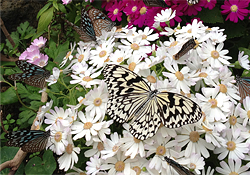
Due to the elimination of such 'restraints' as fences and cages within Nagasaki Biopark, do any of the animals ever attempt to run away or otherwise escape? After all, this is one of our primary objectives - to make the animal so relaxed and generally 'at home' as it were, that they have no desire to escape. And with animals such as the lemur, we have been successful in this objective. With other animals, we still have some work to do. There are obstacles to overcome, certainly, but through ceaseless experimentation, and throgh general 'trial and error', we are continually seeking to overcome these
Please follow the following rules
- Don't give anything other than food sold inside the park to animals.
- Don't try to pet or hold animals if they resist. They are wild animals and might bite when upset.
- Please wash your hands after you touch animals.
- Smoking is allowed only in designated areas.
Facility Guideline
| Conceptual and constructional design |
: The late Norio Kondo Emeritus professor of Tokyo University of Agriculture |
|---|---|
| Architectural planning | : Nihon Sekkei Inc. |
| Total site area | : About 300,000 square meters |
| Number of animals kept | : About 2,000 (200 species) |
| Number of plants grown | : About 30,000 (1,000 species) |